DAC7 and Bol.com: What It Means for Your Bookkeeping
BolMoneybird Team
team@bolmoneybird.nl
Since January 1, 2023, Bol.com has been required to share your sales data with the Dutch Tax Authority. That is the core of DAC7, a European directive that forces platforms like Bol.com, Airbnb, and Vinted to automatically report seller revenue to tax authorities. For many Bol.com sellers, this is new territory. In this article, we explain what DAC7 means, what Bol.com reports, and how to structure your bookkeeping so you are always prepared if the tax authority comes asking.
What Is DAC7?
DAC7 stands for Directive on Administrative Cooperation, seventh version. It is a European directive that allows tax authorities within the EU to share income data for people earning through digital platforms. The idea is straightforward: the tax authority wants to know how much you earn via platforms, even if those platforms are based abroad.
In the Netherlands, the reporting obligation applies from tax year 2023 onward. Platforms must submit seller data for the previous year before January 31 each year. So Bol.com submits 2023 data in early 2024, 2024 data in early 2025, and so on.
What exactly does Bol.com report? At minimum: your name and address, your BSN or Chamber of Commerce number, the total amount of your payouts per quarter, the number of transactions, and the commissions Bol.com withheld. In short, the tax authority will soon know exactly how much you earned via Bol.com.
Who Does This Apply To?
DAC7 applies to all sellers active on Bol.com, both individuals and businesses. There is a threshold: platforms only need to report if a seller completes more than 30 transactions per year or earns more than €2,000 in revenue. As a professional Bol.com seller, you will almost certainly exceed that.
For sole traders and small limited companies, nothing changes in substance, as long as you were already reporting your revenue correctly. DAC7 is not a new tax obligation, but a verifiable reporting system. The risk lies with sellers who did not fully declare their income.
What Does This Mean for You in Practice?
The core message is this: make sure your own records match what Bol.com reports to the tax authority. If there is a discrepancy between the numbers in your tax return and what Bol.com submitted, that can trigger a tax audit.
This sounds logical, but in practice it often goes wrong. One common issue is the year of processing. Bol.com reports payouts when they are made. If you, as a sole trader, book a sales invoice when payment is received rather than when the sale occurred, and the sale happened in the previous calendar year, a difference arises.
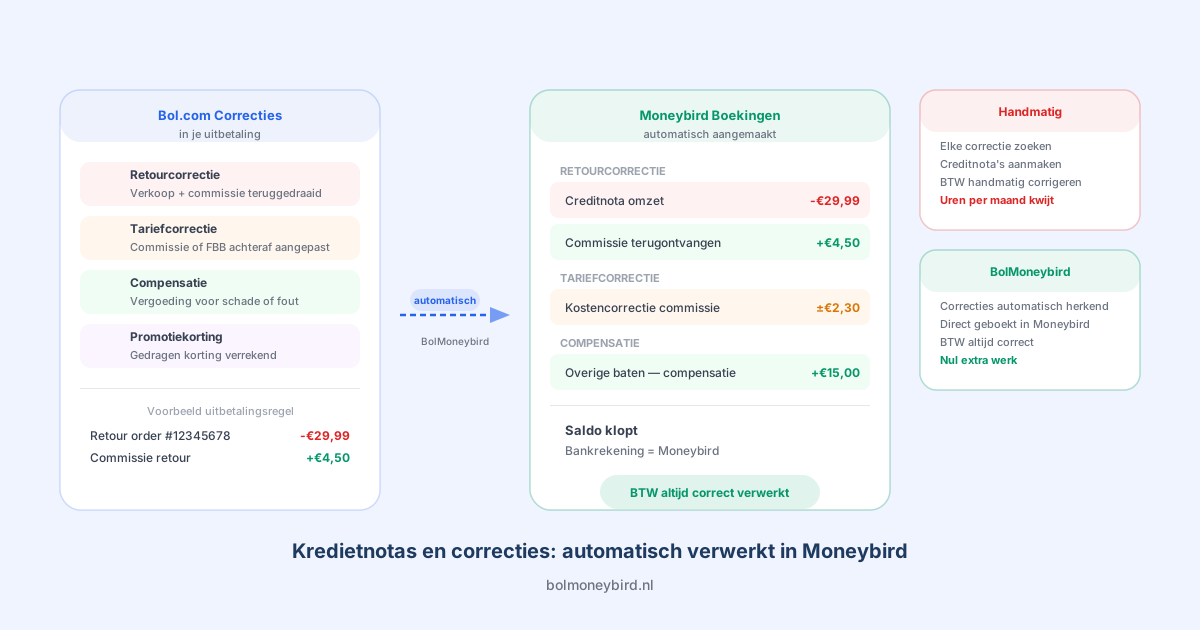
Another issue is returns. Bol.com settles returns in a later payout, sometimes in a different calendar year. If you do not correctly book returns as credit notes in Moneybird, your revenue figure will not match Bol.com’s DAC7 report. We previously wrote about booking returns in Moneybird, and in the context of DAC7, that has never been more relevant.
How to Structure Your Bookkeeping
The best protection against issues with the tax authority is an accurate, up-to-date set of books that aligns with the Bol.com payment specifications. In practice, that means a few concrete things.
First: book each order at the time of sale, not the time of payout. In Moneybird, you do this by creating a sales invoice per order. This ensures the revenue in your bookkeeping matches the year in which Bol.com registers the transaction.
Second: process returns immediately as credit notes when Bol.com confirms them. Do not wait until they appear in a payout, which can happen weeks later.
Third: track VAT rates per transaction. Bol.com sells across multiple countries and not every transaction falls under the Dutch VAT rate. If you sell to consumers in other EU countries, the OSS scheme may apply. We covered this in our article on cross-border VAT and OSS for Bol.com sellers.
How BolMoneybird Helps
Manually keeping track of what Bol.com reports to the tax authority and aligning it with your own administration is time-consuming and error-prone. BolMoneybird automates this completely.
Every Bol.com order is automatically created as a sales invoice in Moneybird, with the correct date, the correct VAT rate, and the correct customer details. Returns are automatically processed as credit notes. Commissions and other Bol.com deductions are booked separately so you always have a complete picture.
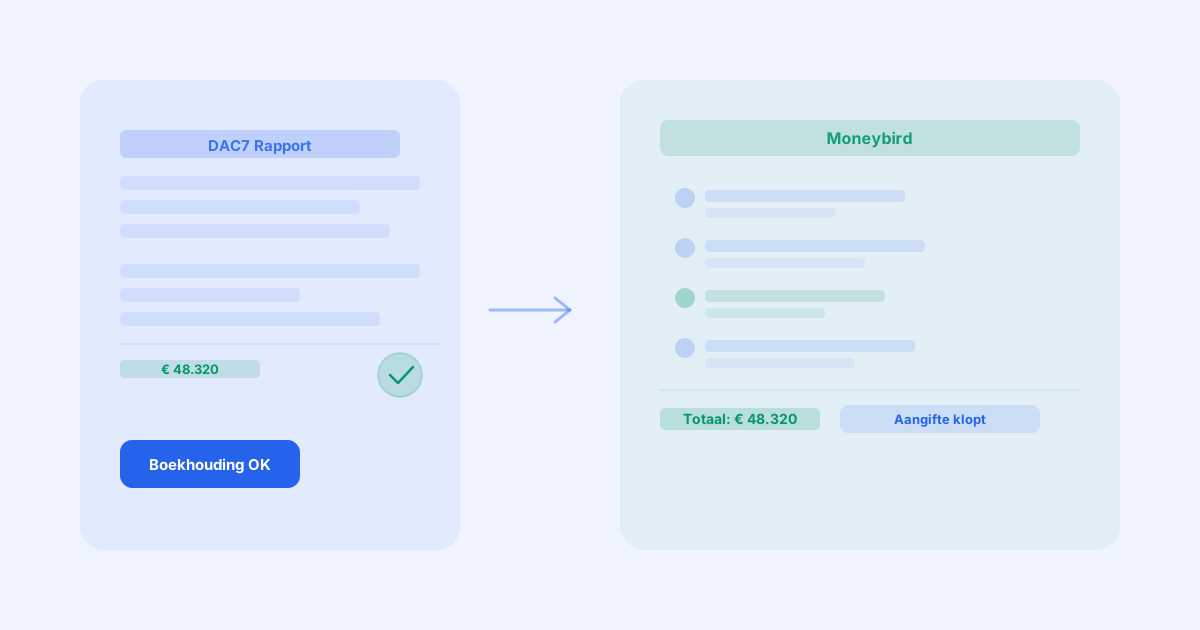
The result is a set of books that stays in sync with the data Bol.com reports to the tax authority at all times. If the tax authority ever has questions, all your documentation is immediately available. No manual searching through payment specifications, no reconciliation gaps, no stress.
Conclusion
DAC7 makes the tax authority smarter: they will soon know exactly how much you earn via Bol.com, without you doing anything. That is good news if your books are in order, but risky if there are discrepancies.
Make sure your Moneybird administration aligns with Bol.com’s reports: book at the moment of sale, process returns immediately, and track VAT rates per transaction. With BolMoneybird, this happens automatically, so you can focus on your business instead of your administration.
Want to learn more or get started right away? Visit bolmoneybird.nl and connect your Bol.com account to Moneybird in five minutes.
Tags
Share